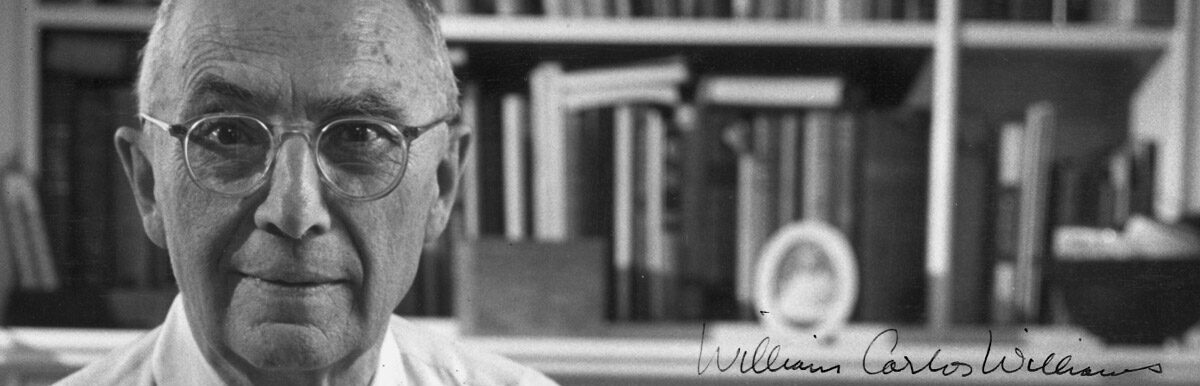
In 1941 William Carlos Williams attended the First Inter-American Writers’ Conference of the University of Puerto Rico, a ten-day international gathering of writers at the university’s campus in Río Piedras near San Juan. “In his featured lecture on poetic form,” writes Jonathan Cohen, Williams emphasized that Latin America had much to offer the writers of the United States, and that its vital function was “To introduce us to Spanish and Portuguese literature—pure and simple.”
During his visit Williams met the playwright Luis Rechani Agrait, who gave him a copy of his play Mi señoría that had been staged the previous year. This November Swan Isle Press will publish Cohen’s edition of Williams’s translation of Rechani Agrait’s play. The edition includes an Introduction by Cohen, a Foreword by Julio Marzán, and an Afterword by José Luis Ramos Escobar, theater scholar and playwright and former director of the drama department at the University of Puerto Rico−Rio Piedras.
Cohen explains that “My Excellency, as Williams calls the play in his translation, is a political farce set in an ‘imaginary country’ that resembles Puerto Rico during the Great Depression, with its high unemployment and labor unrest. The play focuses on the plight of an idealistic but naive man, Buenaventura Padilla, in a completely corrupt political system.” Cohen adds that “the play is successful as a satire largely because of Buenaventura’s language—recreated by Williams—with its pompous style combined with stunning malapropisms and clownish errors in history and grammar. “
The poet, scholar, and activist Muna Lee called Williams’s translation project “extremely important news” in the newspaper Puerto Rico World Journal—that “[Williams] will translate and submit to a U.S. producer Rechani Agrait’s Mi señoría.” He told her in a letter, from which she quoted him in her regular column, soon after the 1941 Inter-American Writers’ Conference:
“The revolution in my sensual filing-cabinet has been so complete that I remain like a man between two worlds, the old with all the geography-book pictures of the West Indies in it and the thrilling new in which all of you at the University [of Puerto Rico] appear. I hardly know which is real and which the illusion but it’s getting clearer day by day. We had to be home again before we could realize how very fortunate we had been, the whole schedule of it right out of a dream.”
Williams went on to say:
“I was also delighted with Rechani Agrait. Come what may I’ll do his play into good American for him and submit it to someone here before another year is out. . . . Time is the thing—l am swamped with the minute affairs of my life until I think that everything is already over and ended. The days immediately following my return were diabolic, day and night, two babies and people in the office like ants—more or less.”
Summing up his visit to Puerto Rico, his first ever, he told Lee, “I think I have never enjoyed a more satisfying journey from home. I’ll be digesting my experiences there in Puerto Rico for years to come.”
Jonathan Cohen is an award-winning translator of Latin American poetry and scholar of inter-American literature. He is editor of Williams’s verse translations from Spanish, By Word of Mouth, and his translation of the Spanish Golden Age novella The Dog and the Fever.
