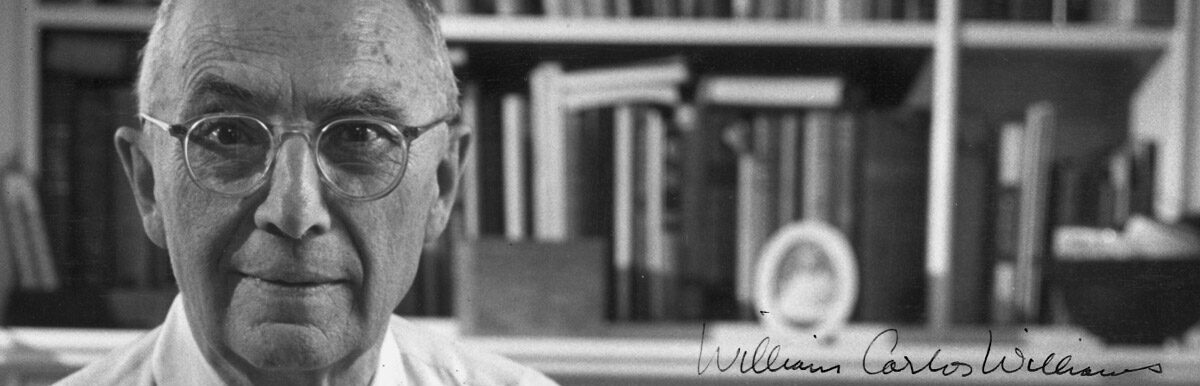

Each year the Society awards an annual prize of $500 for the best work published in the William Carlos Williams Review. The selection committee is pleased to announce Richard Ratzan’s essay “Ambiguity in the Short Fiction of William Carlos Williams” as the 2024 award winner.
The committee was impressed by the foundational, far-reaching contribution this essay offers to advancing the study of Williams’s short fiction. Ratzan’s theorization of “ambiguity” as that which gives the reader a sense of “foreshortened closure” offers new paths for considering the medical ethics central to so many stories in the collection The Farmer’s Daughters, the text at the center of Ratzan’s essay. As Ratzan argues, the stories reflect an uncertainty that is at the heart of medical practice “not merely because there is too little information available to the physician or because the available information is inadequately understood and dynamically changing, but because of the very nature of the necessarily fallible, decisions that characterize the practice of medicine.” His essay offers close readings that call attention to the blending of the aesthetic choices in Williams’s short stories and his work as a physician, as well as the need to address his short stories in the context of their collections, rather than as texts published in isolation.
The Society remains grateful for Scott Peterson’s generous support of Williams studies. Ten years ago, Peterson endowed the prize to honor new and innovative work in the Review. On this occasion we also want to acknowledge that in addition to Ratzan’s contribution, and the other excellent essays in volume 41 of the Review, Peterson returns to Paterson with his article “‘[M]y “Case” to Work Up’: William Carlos Williams’s Paterson.” As scholars of the poem know, Peterson’s An Approach to Paterson (Yale UP 1967) was published on the threshold of a revived academic interest in Williams and was the first book-length study of the poem. In this most recent contribution to the study of Paterson, Peterson ties together critical debates of the form of Williams’s long poem with his medical practice through the medical “work up” as a model for the poem’s aesthetics and structure. As Peterson argues, Paterson is “a doctor-poet’s workup of his case history of life, an approach to his holistic epic in which the approach to the poem and the approach to the patient are one.” A physician and writer himself, it is fitting that once again Peterson’s work invites Williams scholars to take seriously his work as a “doctor-poet” across his oeuvre.
